How to Successfully Import and Distribute Steel
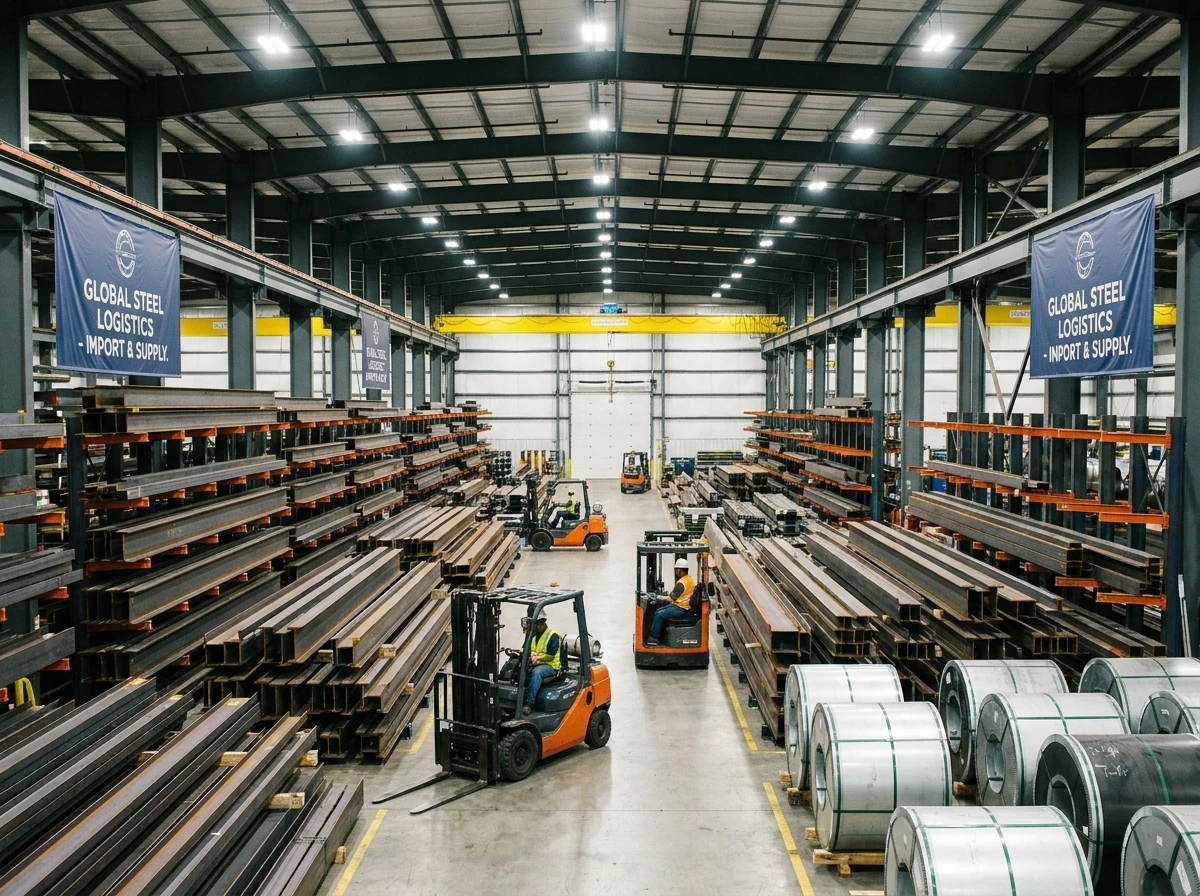
Why Steel Is One of the Most Profitable Imports
Steel is the most widely used construction material in the world and one of the most traded commodities in international trade. Its demand is structurally stable because it is tied to sectors that never fully stop: construction, manufacturing, infrastructure, energy, and transportation.
For the business-minded importer, steel offers an attractive combination: high demand, large markets, differentiation opportunities by product type and origin, and reasonable margins when the supply chain is well managed.
Most Commonly Imported Steel Types
Before starting, it is essential to define which product categories you will work with. The most imported in Latin America and the Caribbean are:
- Long steel: deformed rebar for reinforced concrete, structural profiles (H, I, U), round and square tubes
- Flat steel: hot-rolled coils (HRC), cold-rolled coils (CRC), galvanized and pre-painted sheets
- Stainless steel: in coils, sheets, and tubes for food, chemical, and premium construction industries
- Seamless pipes: for oil and gas, water, and high-pressure applications
Supplier Selection and Origin
The main steel exporters are China, Japan, South Korea, Turkey, and the European Union. Chinese steel is the most economical but may be subject to antidumping tariffs in some markets. Turkish and European steel offers greater quality standard consistency, preferred in more demanding markets.
To verify steel quality, always require the Mill Test Certificate (MTC) from the manufacturer, certifying chemical composition and mechanical properties per the applicable standard (ASTM, EN, GB, JIS). Without this document, the product should not be accepted.
Logistics and Import Costs
Steel is transported mainly in containers (profiles, pipes, small-format coils) or as break-bulk cargo on multipurpose vessels (long rebar, sheet bundles). For small and medium volumes, containers are more practical; for large volumes, bulk shipping significantly reduces cost per ton.
Import costs include: CIF price (cost, insurance, and freight), import duties (0% to 25% depending on country and product), VAT or consumption taxes, and customs clearance and local transport costs. A customs broker specialized in steel can be your best ally for optimizing tariff classification.
Distribution and Target Customers
The main customers of a steel distributor are construction companies, metal structure manufacturers, welding and metalworking shops, industrial hardware stores, and large infrastructure projects. To serve these markets, you need storage capacity, a sales team with technical knowledge, and logistics capacity for on-site delivery.
Differentiation as a steel distributor can come through service: fast delivery, custom cutting, technical advice, customer financing, or access to specialized products. Price matters, but service retains customers.
Financial Management of the Operation
Importing steel means tying up capital during transit and while inventory waits to be sold. Plan cash flow precisely: when you pay the supplier (typically 30% upfront, 70% against shipment), when goods arrive, when they are sold, and when payment is collected (30-90 days in the market).
Bank credit lines for imports and portfolio factoring are key tools for scaling without depleting capital. Evaluate these options with your bank or a financial intermediary specialized in foreign trade.
Xportprise: Your Steel Import Partner
At Xportprise, we work with steelmakers and steel distributors in Asia, Europe, and the Americas to connect them with buyers in emerging markets. We manage complete logistics, import documentation, and post-sale technical support. If you're looking for a partner for your steel operations, contact us today.