Types of Maritime Containers for International Trade
The Importance of Choosing the Right Container
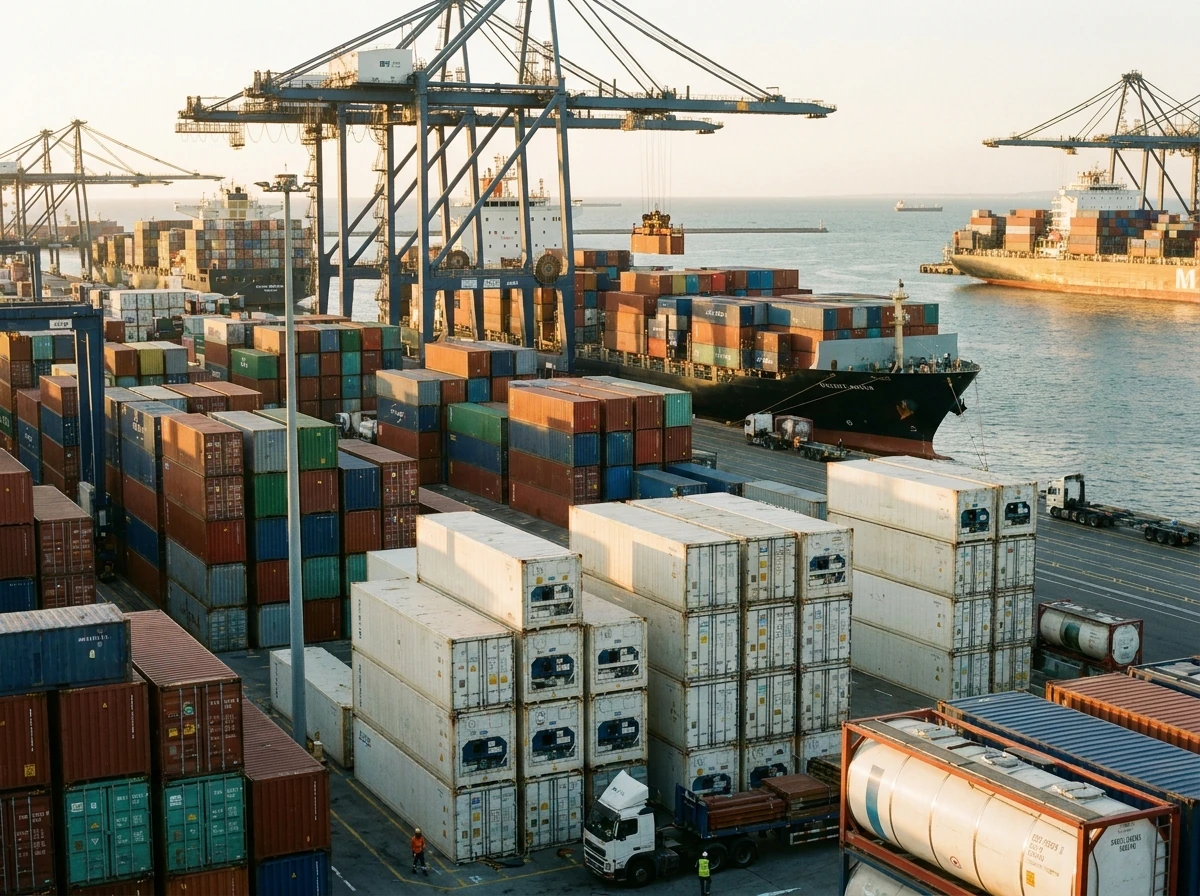
The container is the basic unit of international maritime transport, and choosing the right one can make the difference between an efficient logistics operation and costly damage or incompatibilities in transit. Understanding the types available and their characteristics is essential for any importer or exporter.
Standard 20-Foot Container (TEU)
This is the most widely used container in the world and the standard unit of measurement in global maritime trade (TEU: Twenty-foot Equivalent Unit). Internal dimensions are approximately 5.9 m long, 2.35 m wide, and 2.39 m high, with a load capacity of up to 28 metric tons.
It is ideal for general cargo, manufactured goods, medium-sized machinery, appliances, and packaged products. If your cargo volume does not exceed 28 CBM, the 20-foot container is the most cost-effective option.
40-Foot Container and High Cube (HC)
The 40-foot container doubles the volumetric capacity of the 20-foot version, with 12 meters of interior length. The High Cube version adds 30 cm of extra height (2.69 m interior), making it ideal for bulky but lightweight cargo: furniture, textiles, mattresses, vehicles, and large-format palletized goods.
The 40 HC is the preferred choice for high-volume-to-weight ratio merchandise, maximizing space without exceeding weight limits.
Refrigerated Container (Reefer)
Reefers maintain constant controlled temperatures from -30 °C to +30 °C depending on the model. They are essential for perishable food, pharmaceuticals, flowers, seafood, fruits, and any temperature-sensitive cargo.
The cost is significantly higher than a dry container, both in freight and port electrical connection fees. However, for products that require it, it is the only viable option.
Flat Rack and Open Top Containers
Flat rack containers have no side walls or roof, making them ideal for heavy machinery, industrial equipment, oversized vehicles, or cargo exceeding standard container dimensions. They allow cargo to overhang the sides or top.
The Open Top container retains side walls and has a removable roof or tarpaulin, facilitating crane loading from above. It is ideal for tall cargo such as marble blocks, scrap metal, or construction machinery.
Tank Container (ISO Tank)
ISO Tanks are specialized for bulk liquids: vegetable oils, chemicals, wines, alcohols, concentrated juices, and liquid raw materials. They comply with strict international regulations and are built in stainless steel with capacities of 17,000 to 26,000 liters.
How to Choose the Right Container
The decision depends on four factors: type of cargo (solid, liquid, perishable, oversized), total volume and weight, available freight budget, and specific product requirements. A logistics agent can help you optimize the choice and reduce costs through LCL consolidation if the volume does not justify a full container (FCL).
At Xportprise, we manage LCL and FCL operations with global shipping lines. Contact us to get a quote for your cargo with the most efficient solution.